
Description
VERTICAL SETTLING SILOS FROM 15 TO 110 m³
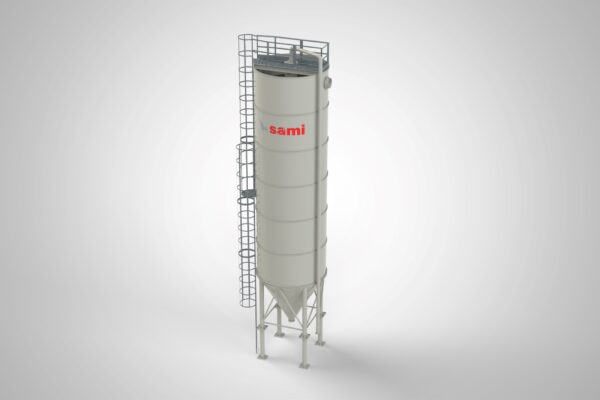
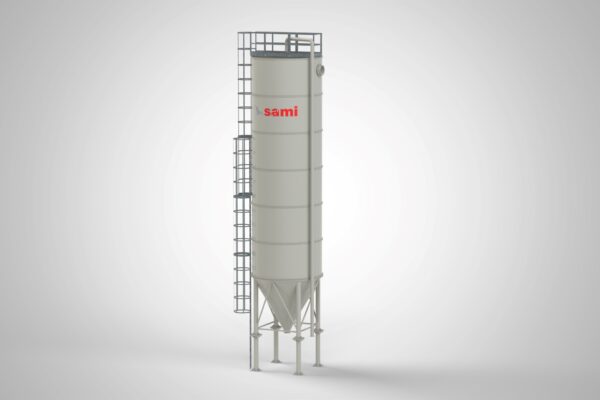
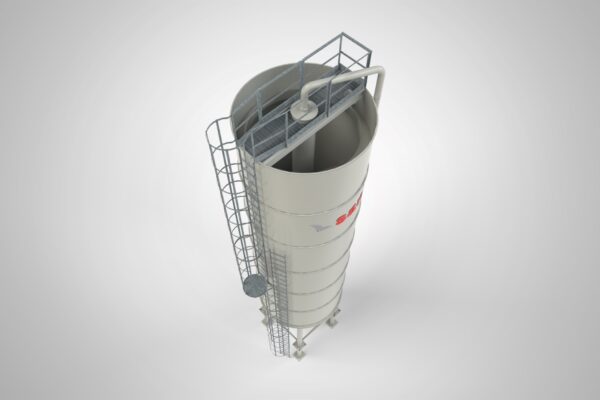
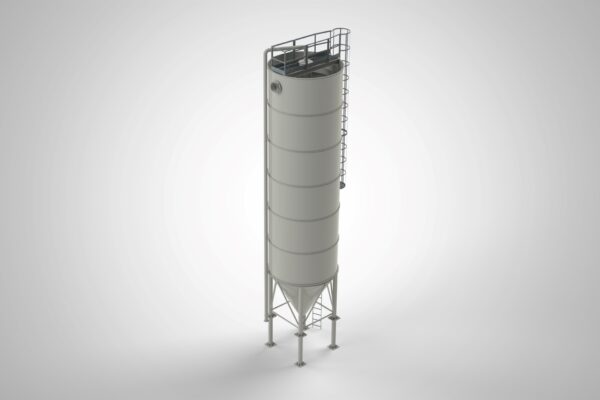
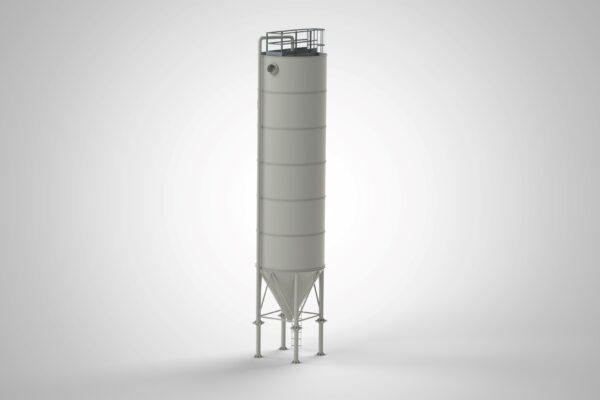
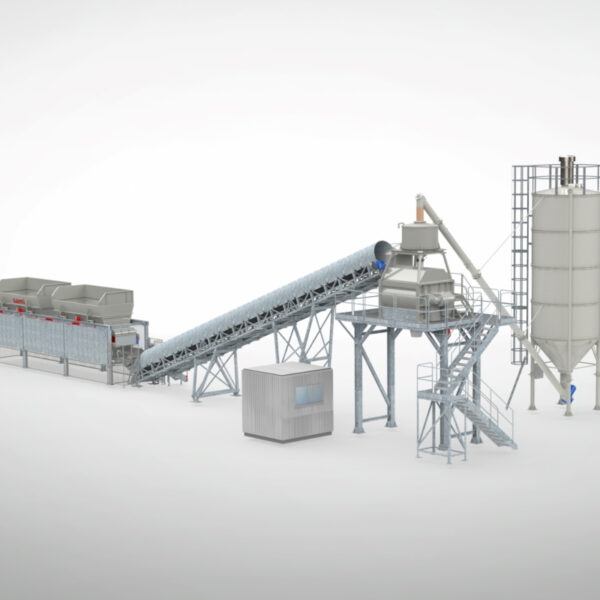
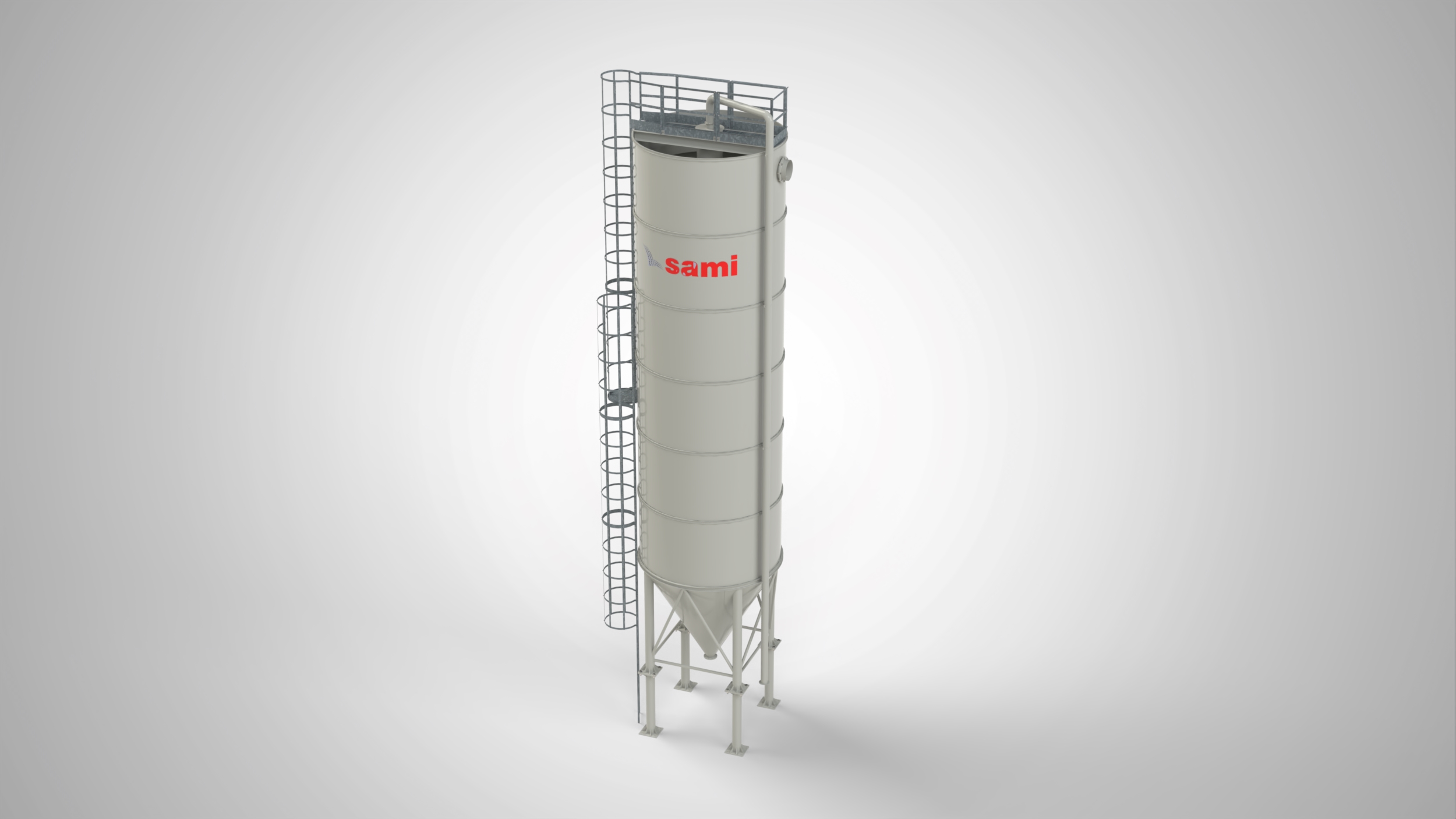
The SV-DEC series vertical settling silos operate as advanced industrial clarifiers and sedimentators, basing their performance on the physical principle of natural precipitation of suspended solids within a liquid stream, known as static decantation. During the treatment cycle, solid particles and heavy sediments progressively settle toward the bottom of the geometric structure, while the purified and clarified water overflows from the top of the cylinder to be channeled and sent directly into the clean water collection tank. The precise inclination of the lower cone of the SV-DEC silos has been engineered to foster and accelerate this specific sedimentation process. Consequently, the sludge accumulated and thickened at the base of the decanter can be extracted periodically and in total safety via a dedicated hydraulic extraction pump. These vertical systems represent the specialized version, dedicated to water purification, of traditional monolithic and telescopic silos. Available in structural diameters of 2.2 meters, 2.4 meters, and 3.0 meters, they cover a volumetric storage capacity ranging from 15 m³ up to 110 m³, while keeping footprint dimensions optimized during the design phase to cut logistical transport costs. Settling silos express maximum operational efficiency when integrated within complex soil and sludge treatment plants aimed at the solidification, stabilization, and final inertization of industrial waste, as is the case with the ECOMIX system.
STATIC DECANTATION OF WASTEWATER
Wastewater is defined as discharge fluids which, following use in domestic, industrial, or agricultural settings, contain variable concentrations of organic and inorganic substances potentially hazardous to human health and the ecosystem. To guarantee environmental protection and comply with strict current regulations, before being reintroduced into natural receiving water bodies—such as rivers, lakes, or artificial basins—this water must undergo rigorous purification cycles, as the pollutant load almost always exceeds the intrinsic self-purifying capacity of the soil and surface waters. Unlike advanced mechanical filtration processes carried out by means of a filter press, the static decantation of wastewater performed via SV-DEC vertical silos is configured as a biological-mechanical purification process through natural sedimentation. This method allows for a clear separation between the liquid phase and undesired substances composed of insoluble suspended particles, which are concentrated at the bottom in the form of thick sludge. The primary goal of this engineering procedure is the separation between clean water and contaminants, returning a safe and purified water resource to the environment. This decantation and clarification process represents a fundamental and essential operation within any modern wastewater treatment plant.
EXTRA: SEWAGE SLUDGE
Sewage sludge constitutes the fraction of concentrated solid matter originally contained in wastewater that is intercepted, separated, and removed by means of vertical settling silos and sedimentation systems in general. Depending on their industrial origin, these residual sludges can themselves present high contaminant loads. For this reason, they often require subsidiary chemical-physical treatments before they can be declared suitable for final disposal as non-hazardous special waste, or before being sent to recovery processes for transformation into secondary raw materials destined for new production uses. To meet this specific need, the sludge resulting from water purification processes can be treated in an industrialized and automated manner through the ECOMIX series stabilization and solidification plant, thus completing the circular economy cycle on-site.