
Description
WHAT IS CEMENT-TREATED BASE ?
Cement-treated base is a non-structural composite material primarily used in civil engineering and infrastructure works. It is obtained through the controlled mixing of granular aggregates (which can be natural quarry materials or recycled aggregates from construction and demolition activities), a low percentage of cement, and water.
The primary function of cement-treated base is load-bearing: it is used as a foundation or sub-base layer for the construction of road pavements, airport runways, industrial yards, logistics areas, driveways, and civil works subjected to heavy and repeated loads.
PRODUCTION OF CEMENTITIOUS MIXTURES (150 m³/h CONTINUOUS)
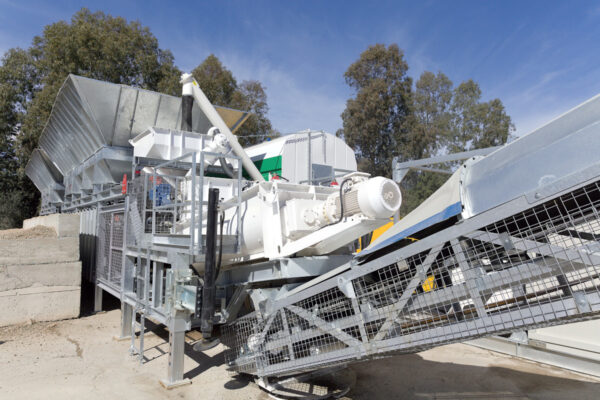
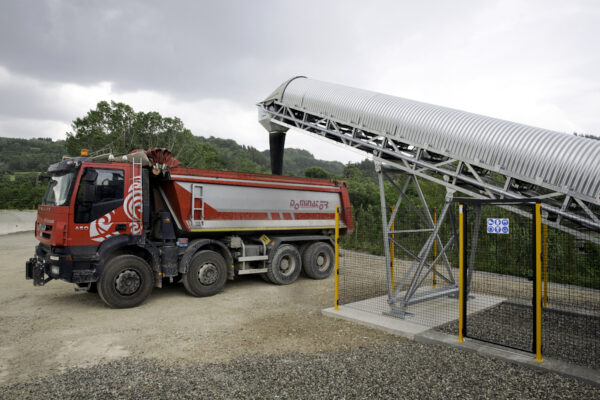
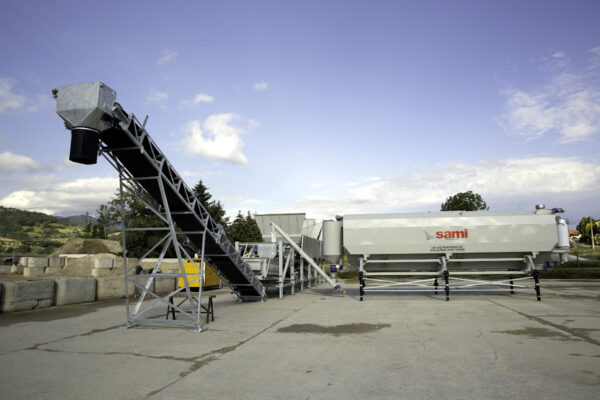
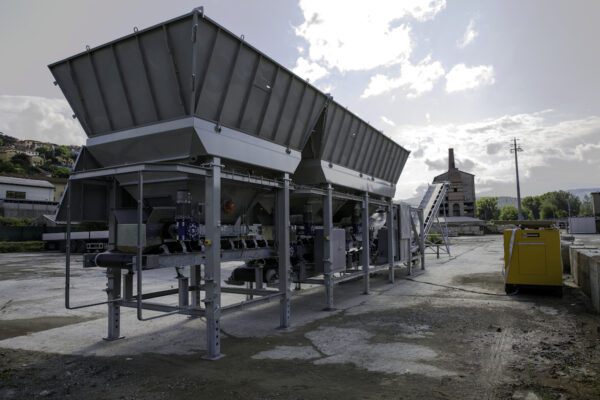
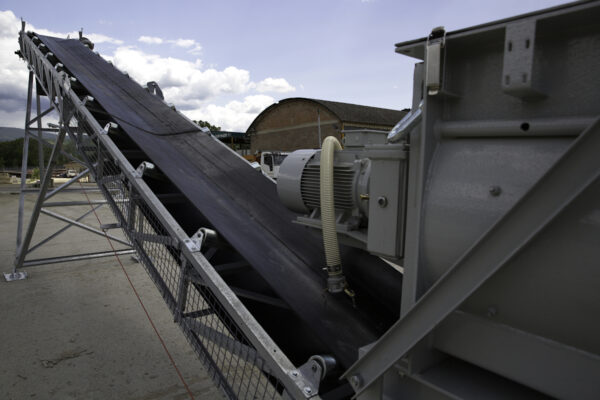
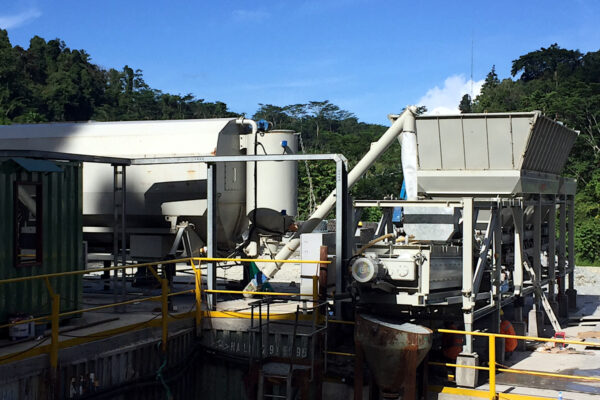
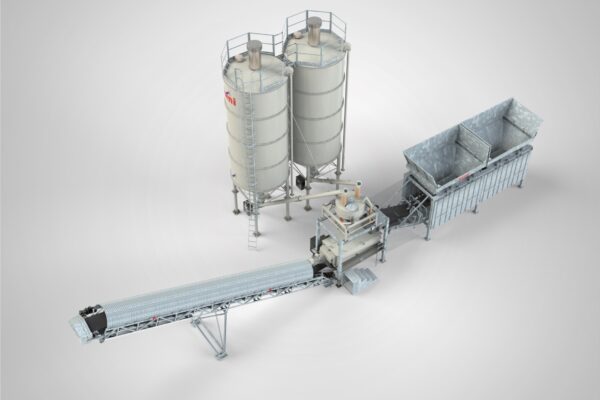
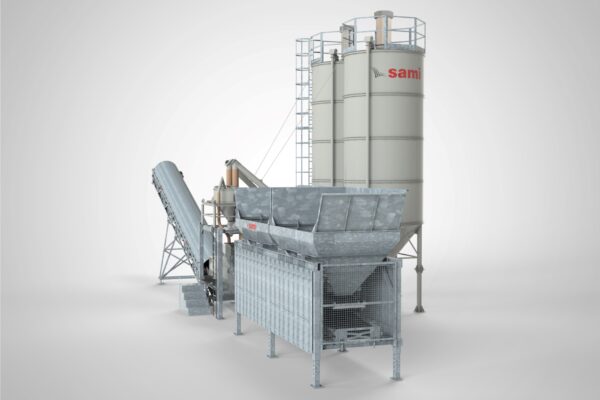
The MULTIMIX plant with integrated mixer stands out as a state-of-the-art solution for the high-efficiency continuous production of cement-treated bases and non-structural cementitious conglomerates. These mixtures are obtained by homogeneously blending granular materials whether composed of natural quarry aggregates or recycled aggregates from construction and demolition activities with water and low percentages of cement. The final product is ideal for use as a foundation layer and structural support for road pavements, airport runways, industrial driveways, and engineering fills, including sub-bases, bases, and lean concrete. From a technical standpoint, the plant consists of two or more aggregate storage hoppers, a cement doser supported by a load-cell loss-in-weight electronic weighing system, a powerful twin-shaft continuous horizontal mixer with a continuous production capacity of 150 m³/h and an inclined belt conveyor designed for the rapid discharge of the mixed material into trucks or transit mixers. Thanks to its compact and modular design, the MULTIMIX cement-treated base production plant is completely independent, flexible, and suitable for both road transport on standard trailers and international shipping inside standard 40-foot containers.
INERT AGGREGATES FROM QUARRY, CRUSHED AND RECLAIMED MATERIALS
The hoppers and compartments dedicated to the aggregates are engineered to optimize the use of both natural quarry materials and recycled aggregates derived from processing and recovering construction and demolition waste, such as rubble, tiles, bricks, or crushed ceramic materials. These recycled materials, which are often complex to manage due to their irregular shape or variable impurities, are extracted smoothly via special, independent volumetric extractor belts. This mechanism allows for precise calibration of hourly flow rates and proportional dosing of all aggregates within the recipe. Upon specific customer request, the extraction belts can be equipped with advanced dynamic electronic weighing systems. This technological upgrade transforms volumetric dosing into high-precision weighed dosing, enabling the MULTIMIX continuous system to produce massive hourly quantities of cementitious conglomerates and non-structural concrete while meeting strict and constant quality standards.
CEMENT, LIME AND COLD BITUMEN EMULSIONS
The storage of one or more types of binders (cement, fly ash) can take place using horizontal EUROSILO silos (mobile silos) or vertical monolithic, telescopic and modular panel silos (fixed/stationary silos) for powdered materials. Integrating specific accessories for dosing and spraying bituminous emulsion expands the plant’s capabilities, making it ideal for the production of cold-mix asphalt and reclaimed asphalts utilizing cold-recycled milled asphalt (RAP). This eco-sustainable process completely eliminates the thermal heating phase for aggregates and bitumen, allowing the production of ecological mixes with reclaimed materials that can reach 100% of the recipe-unlike the 30% limit typical of traditional hot-mix recycling processes. In addition to recovering demolition materials and producing mixes with hydraulic or bituminous binders, the MULTIMIX plant allows for soil stabilization through the production of lime-improved and unbound mixtures. The automated dosing of all components, such as aggregates, cement, water, additives, and emulsions, as well as the detection of residual aggregate moisture and the subsequent automatic correction of the water to be introduced into the mix is managed fully autonomously by an extremely intuitive touchscreen software system on-board, or via a centralized PC workstation located inside the control cabin.